
Market Access & Strategy
From Comfort to Competitiveness: Rethinking Indonesia’s Pharma Independence
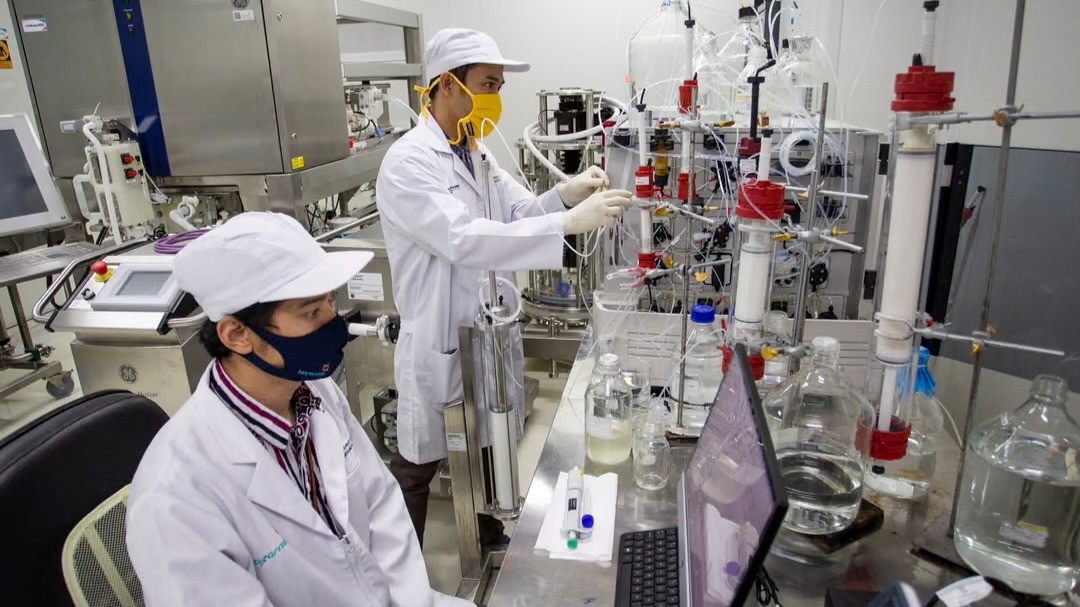
(lmage courtesy ANTARA/ Dhemas Reviyanto)
For two decades, Indonesia’s pharmaceutical policy has championed kemandirian - self-reliance. The idea was legitimate: protect domestic manufacturers, produce locally, and reduce dependence on imported medicines.
It worked - at least in the beginning. The country now meets most of its national demand by volume, and local companies have grown into solid commercial players.
But scale is not the same as strength. Real autonomy isn’t about how much we produce - it’s about what we are capable of producing, how we produce it and to what standard.
The inconvenient truth is that Indonesia still imports close to 90% of its raw materials (APIs). The industry thrives on branded generics, not innovation. And patients continue to have access to only around 9% of new global medicines - the lowest in the G20.
Those gaps have consequences: fewer treatment options, rising outbound medical tourism, and billions of rupiah leaking abroad each year in health spending.
Indonesia has built size, but not yet substance.
There are, of course, green shoots. Joint ventures like Kimia Farma–Sungwun Pharmacopia are starting to produce APIs locally. Bio Farma’s collaboration with Novo Nordisk on insulin is another encouraging example of partnership serving both public-health and industrial goals. These are steps forward - but the road to true capability remains long.
Consider the quality gap. India now counts over 650 FDA-compliant plants, exporting to the world’s most demanding markets. Indonesia, by contrast, still has no publicly listed FDA-approved site, and its exports mostly go to lower-threshold markets in Africa or smaller Asian economies. Protection has brought comfort; it hasn’t yet brought competitiveness.
That’s why kemandirian must evolve. In 2025 and beyond, self-reliance should mean the ability to meet the world’s highest standards, not just local-content quotas. It means producing what the world - and Indonesians - need and can trust.
And it also means being pragmatic about partnerships. Global innovative companies (International Pharmaceutical Manufacturers Group) are not the enemy of self-reliance. They are partners, not foes. Behind closed doors, many are already collaborating through toll-manufacturing, technology transfer, and joint R&D that can accelerate our learning curve. True autonomy isn’t isolation; it’s mastery.
The public narrative from Gabungan Perusahaan Farmasi Indonesia (GP Farmasi) still leans heavily on “self-reliance” and domestic volume. But the champion Indonesia needs today is a different kind of voice - one that sets capability goals, not slogans.
GP Farmasi could become that voice.
It could move from defending comfort to defining performance.
Imagine if GP Farmasi published a capability dashboard each year — tracking real progress in upstream and downstream capacity: how many active ingredients are actually produced locally (not just formulated or packaged), how many products meet international registration standards, how many bioequivalence and quality audits are passed, and how many new medicines reach Indonesian patients.
Imagine if GP Farmasi itself became the steward of transparency on API localisation ; tracking each announced initiative from MOU to molecule, closing the gap between ribbon-cuttings and real supply security.
Imagine if procurement policies rewarded local manufacturers not simply for being local, but for consistently meeting higher standards of quality, and reliability.
And imagine if, instead of portraying innovative companies as threats, GP Farmasi became the broker of smart partnerships - JKN managed-entry agreements, risk-sharing models, and joint technology platforms that bring global innovation home faster.
Because leadership in this new era isn’t about lobbying for more protection or subsidies. It’s about showing that the industry can build capability, not dependency.
As the famous line goes: “Ask not what your country can do for you — ask what you can do for your country.” That spirit applies here.
If GP Farmasi turns its influence outward - helping Indonesia build quality systems, upstream chemistry, and innovation access - it will not just serve its members; it will serve the nation.
Indonesia can absolutely achieve meaningful pharma autonomy - but only by shifting from protection to performance: upstream where it counts, quality that travels, and access that keeps patients at home.
Because real self-reliance isn’t about producing everything. It’s about producing something the world can trust.
As usual, I welcome the debate.
Ait-Allah is a healthcare leader with nearly four decades of experience.
Read more about authorRelated Services


Market Entry & Launch Strategy
From ambition to grounded market presence.
We guide organizations through market assessment, entry design, and stakeholder engagement, turning ambition into actionable strategies tailored to Southeast Asia's realities.


Policy Strategy for Access & Reimbursement
Where innovation meets affordability.
We support client in shaping access frameworks, reimbursement pathways, and pricing strategies that balance commercial value with public health impact.
Turning strategy into action, together.
Start a ConversationOther Insights
Loading