Health Systems & Policy
Has the Job of Leading WHO Changed? Budi Gunadi Sadikin’s unusual candidacy raises a bigger question about what global health needs now.
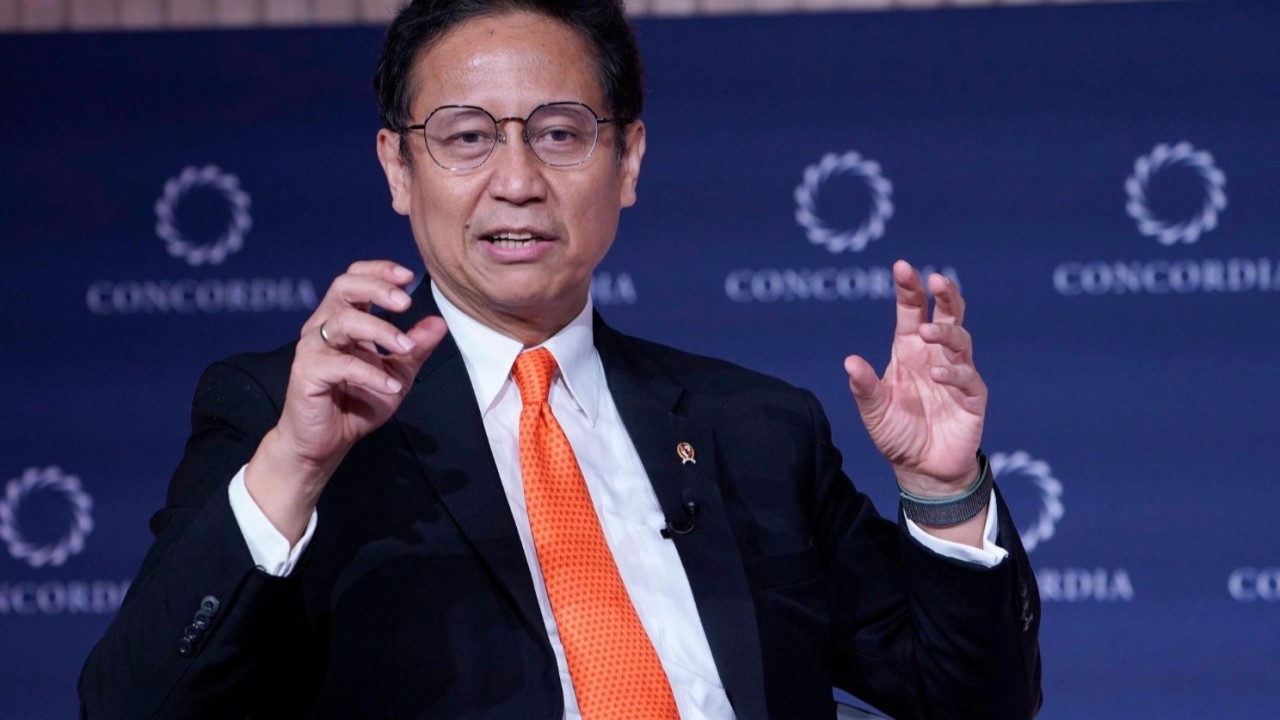
Budi Gunadi Sadikin at the 2023 Concordia Annual Summit. Photo: John Lamparski/Getty Images.
Indonesia has nominated Health Minister Budi Gunadi Sadikin to become the next Director-General of the World Health Organization.
He is an unusual candidate.
He is not a doctor. He is not an epidemiologist. He did not grow up inside WHO, academia or the global health establishment.
Before asking whether that makes him the right or wrong person for the job, there is a more useful question.
What does WHO actually need now?
WHO was built around technical authority.
Science. Knowledge. Standards. Public health expertise.
That still matters. It always will.
But lack of knowledge may no longer be the main problem.
Very often, we know what to do. We just cannot get everyone to do it.
We knew how to make vaccines during COVID. The harder questions were who could manufacture them, who would pay, who would get them first, and who controlled the technology.
We know antimicrobial resistance is dangerous. But doing something about it means governments, doctors, farmers, pharmaceutical companies and patients all changing behavior at the same time.
We know how much chronic disease can be prevented. But prevention quickly becomes a discussion about food, tax, regulation, education, industry and individual choice.
So perhaps the biggest shortage in global health today is not expertise.
It is agreement.
Science gives WHO authority. But then what?
WHO now operates in a harder world.
It has less money. The United States is withdrawing. Countries are more protective of their own interests. Tensions between China and the West affect almost every international institution. Wars are pulling attention and resources elsewhere. Trust in institutions has fallen.
At the same time, we expect WHO to do more.
Pandemics. Antimicrobial resistance. Chronic disease. Climate and health. Universal health coverage.
All important.
But if everything is a priority, what is really a priority?
The next Director-General will of course need to understand health. More importantly, he or she will need to know how to turn knowledge into action.
That is political work. I do not mean party politics. I mean the difficult work of getting countries with different interests, resources and beliefs to agree on enough to move.
The world does not suffer from a shortage of good health advice.
It suffers from a growing inability to act on it together.
The map of global health has changed too
For decades, global health often worked in one direction.
Money, expertise and technology largely came from richer countries. Programs and assistance flowed toward poorer ones.
That world is fading.
China and India are major scientific and industrial powers. African countries want to manufacture more of their own vaccines and medicines. Gulf countries are becoming important health investors. Large middle-income countries face a strange mix of problems. Infectious disease alongside obesity. World-class hospitals alongside basic access problems. Growing domestic industries alongside dependence on imported technology.
Indonesia is a good example.
Not because it is Indonesia’s turn.
That is not enough.
Indonesia has almost 300 million people, with large differences in wealth, access and health outcomes. It still carries a heavy burden of tuberculosis and infectious disease while diabetes, cancer, cardiovascular disease and other chronic conditions are rising fast.
It has a growing pharmaceutical and vaccine industry, but still depends heavily on imported technology and materials. It wants the benefits of an open global system while also wanting more ability to take care of itself.
In other words, many of the tensions that global health will have to solve already exist inside Indonesia.
A good health idea means little until it works in the real world.
That means money. Supply chains. Politics. Culture. Industry. People. Implementation.
More and more, the future of global health will be decided in places like Jakarta, Delhi, Beijing, Lagos and São Paulo. Not only Geneva, Washington, London or Boston.
Then there is Minister Budi
This is where his unusual background becomes interesting.
Budi studied nuclear physics. Then banking. Then he ran large businesses and state enterprises.
In December 2020, in the middle of COVID, he became Indonesia’s Minister of Health.
Much of his career has involved trying to make large, complicated systems work.
There is some evidence behind that.
He took over the health ministry in the middle of a national emergency and helped drive vaccination at huge scale. He then pushed a broad reform of the health system, covering primary care, hospitals, workforce, financing, technology and health security.
During Indonesia’s G20 presidency, he was also closely involved in the creation of the Pandemic Fund, bringing health and finance into the same conversation at a global level.
His years in banking and large state enterprises also matter for another reason. WHO is facing a serious financing problem. Understanding money and organizations is not a strange qualification for the job anymore.
None of this makes Budi a conventional candidate.
That may be the point.
He tends to ask simple questions.
What are we trying to achieve?
Why is it not happening?
How do we measure it?
Who is responsible?
Can it scale?
WHO certainly needs those questions.
Processes become normal because they have always been there. Complexity slowly becomes accepted.
One question in particular matters now:
What should WHO stop doing?
An organization with less money and more demands cannot simply keep adding priorities.
That is no longer just a budget question.
It is a question about what WHO is for.
But here is the difficult part
The qualities that make an outsider interesting can also create problems.
Speed can move things.
It can also leave people behind.
Conviction can push through reform.
It can also make disagreement look like resistance.
Minister Budi’s health reforms in Indonesia created plenty of resistance, including from parts of the medical profession. Some of that was inevitable. But the lesson matters beyond Indonesia.
Being right and bringing a system with you are not the same thing.
That distinction becomes much more important at WHO.
A health minister has executive power.
The Director-General of WHO cannot simply tell 194 countries what to do.
Countries have different governments, different interests, different resources and increasingly different ideas about the world.
At WHO, persuasion is authority.
That creates an interesting test for any outsider who wants to change the organization.
Can you keep enough impatience to change things, while having enough patience to build agreement?
Beyond the Global South
Budi has said he wants to represent developing countries and the Global South.
That is understandable.
Many developing countries still have too little influence over the institutions that shape global health. They also remember what happened during COVID, when access to vaccines, technology and manufacturing capacity was far from equal.
But I would be careful with this argument.
The world does not need a WHO Director-General for the Global South.
It needs a Director-General for the whole world.
Representation may help you get to the table.
It is not enough to lead the table.
Indonesia may actually have a stronger story to tell.
It works with China and with the United States. It is Asian and deeply connected to the wider world. It is the world’s largest Muslim-majority country and also a highly diverse society. It is a developing country and a major economy. It sits inside ASEAN and the G20.
That experience of living between worlds may matter.
The next WHO leader does not need to make the South stronger against the North.
The much harder job is to find where North and South still have enough in common to act together.
Health should be one of those places.
We had better hope it is.
An outsider also has something to prove
WHO is full of people who have spent their lives studying disease, health systems, epidemiology, vaccines and public health.
That expertise deserves respect.
The job of the Director-General is to make the room smarter, and then make what it knows matter outside the room.
An outsider can challenge assumptions inside an institution.
But he must also allow his own assumptions to be challenged.
Simple questions still need serious answers.
Speed still needs evidence.
Management cannot replace science.
And changing WHO cannot come at the cost of the scientific trust that gives WHO its value.
I would like to hear harder questions
Over the coming months, the candidates will make speeches.
We will hear about change. Equity. Access. Stronger health systems.
All important.
But I hope the debate gets more specific.
What can WHO do that nobody else can?
What should it stop doing?
If the money is not there, what comes first?
What belongs in Geneva, what belongs in the regions, and what belongs in countries?
How should WHO work with pharmaceutical companies and other industries without becoming too close to them?
How can countries build more of their own health capacity without cutting themselves off from the world?
How does WHO protect science when health is increasingly pulled into geopolitics?
And how do you get countries that disagree on almost everything else to cooperate on health?
I would pay close attention to the candidate who can answer those questions simply.
So, is Budi the man?
Too early to say.
There are other serious candidates. The field is not yet final. And Budi should not lead WHO simply because he is Indonesian, Asian or from the Global South.
He should lead it only if he can make a convincing case that he understands the organization WHO needs to become, and that he can bring countries with him.
WHO does not lack scientists.
It does not lack knowledge.
What it increasingly lacks is a world in which knowledge easily turns into common action.
If the problem has changed, we should at least be open to the possibility that the profile of the person leading the response may need to change too.
An outsider carries risks.
He can misunderstand the institution.
The institution can reject him.
Or he can become so absorbed by it that he stops asking the questions that made being an outsider useful in the first place.
But there is also value in someone walking into a room and asking a very simple question:
Why?
Budi Gunadi Sadikin’s candidacy does not answer the question of who should lead WHO.
But it makes a bigger question difficult to avoid.
What kind of WHO does this troubled world need now?
And then:
Who can actually make it work?
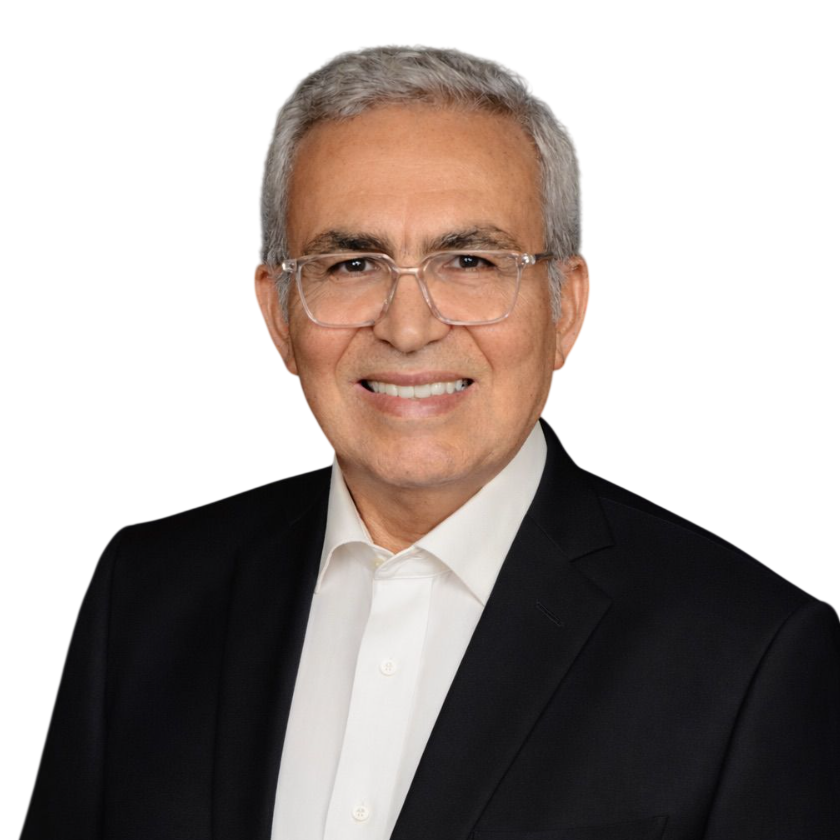
Ait-Allah is a healthcare leader with nearly four decades of experience.
Read more about authorRelated Services


Leadership Development & Change Management
Helping Leaders Embrace Change Confidently.
We assist Southeast Asian organizations in leadership development and change management to transform goals into actionable plans.


Senior Perspective and Trusted Counsel on Complex Strategic Decisions
Trusted advice from experienced experts.
We assist clients in developing access frameworks, reimbursement strategies, and pricing models that align commercial interests with public health goals.
Turning strategy into action, together.
Start a ConversationOther Insights
Loading