
AI, Digital & Health Tech
Mr Health Minister: Indonesia's healthcare transformation needs an AI roadmap
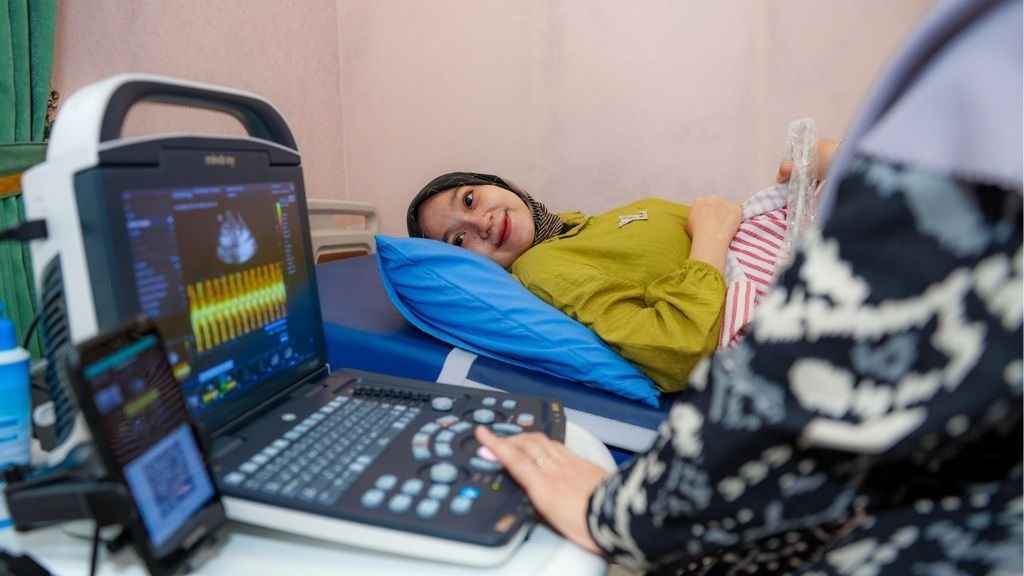
Image courtesy Ministry of Health, Indonesia
Indonesia is in the midst of a much-touted healthcare transformation. But unless artificial intelligence is used wisely - and doctors are trained to lead it - the transformation risks falling short of its targets.
So far, much of the conversation has focused on infrastructure: EMR rollouts, Puskesmas digitization, and even a national AI strategy with ethics principles under development. These are important steps. Yet what’s still missing is a clear, physician-centered plan: a roadmap that equips doctors with the knowledge, tools, and governance to drive transformation from the clinic floor upward.
While Indonesia has drafted a national AI strategy, created legal room for AI in health, and experimented with targeted pilots, there is no dedicated, physician-focused AI roadmap for healthcare literacy, integration, and system redesign. That gap matters.
Why AI matters when doctors are few
Indonesia’s doctor-to-population ratio remains well below WHO benchmarks. The country has roughly 150,000 general practitioners, but still lack around 120,000 more to reach the standard of one doctor per 1,000 people. Specialist coverage is even thinner: with just 0.17 specialists per 1,000, Indonesia lags far behind national targets. In total, our health workforce stands at 3.84 per 1,000 population, below the WHO’s 4.45 threshold for universal coverage.
In this context where every physician’s time is scarce, AI is not a luxury. It is a necessity. Picture automated radiology triage flagging TB or cancer across thousands of Puskesmas. Or AI tools guiding community health workers in under-resourced districts to screen and diagnose more effectively. Globally, countries with similar shortages are showing what’s possible. In several low- and middle-income countries, AI-powered clinical decision support has improved both critical care outcomes and system efficiency. In rural China, pilot AI assistants demonstrated their value as trusted aides when adapted to local workflows. In Finland, AI software safely ruled out more than a third of normal chest X-rays in primary care- with over 99% sensitivity-freeing radiologists to focus on complex cases.
These are proof points: AI multiplies the impact of physicians when systems and training are ready. And unlike many donor-driven pilots elsewhere, Indonesia already has the ethical and legal foundations in place: Permenkes 20/2019 on telemedicine and the 2022 Personal Data Protection Law provide the backbone for safe deployment.
What’s missing
To move from promise to practice, three things are urgent:
- First, educate physicians from the ground up. AI literacy must be embedded in medical schools and continuing education. Doctors need to know what AI can - and cannot -do, how to evaluate tools, and how to integrate them safely into patient care.
- Second, design systems, not pilots. Fragmented trials must give way to systemic redesign. AI-enabled triage should become part of standard screening workflows, linked to SatuSehat and supported by national procurement—not just donor demos.
- Third, involve clinicians in governance. As Indonesia finalizes its AI roadmap and ethics framework, practicing doctors -through IDI-must shape policies around data use, transparency, and accountability.
A Call to leadership
Mr. Minister, momentum is on your side. Health infrastructure is improving, EMRs are scaling, and the legal groundwork for AI is in place. What’s missing now is empowerment: empowering Indonesian doctors to lead, not merely adopt, AI.
If infrastructure continues to outpace investment in human capacity and trust, the transformation will remain incomplete. But if we go past the hype, train our doctors, and redesign the system, Indonesia can set a regional example.
This is where IDI must lead -with government backing in regulation, investment, and integration.
The promise is not another shiny app or donor-funded pilot. The promise is a health system where AI makes scarce physicians more effective, screenings more accessible, and diagnoses more timely - for every Indonesian, not just the privileged few.
#Indonesia #Healthcaretransformation #AIinHealthcare #Digitalhealth #Medicaleducation #Healthequity #Publichealth
Ait-Allah is a healthcare leader with nearly four decades of experience.
Read more about authorRelated Services


Leadership Development & Change Management
Helping Leaders Embrace Change Confidently.
We assist Southeast Asian organizations in leadership development and change management to transform goals into actionable plans.


Senior Perspective and Trusted Counsel on Complex Strategic Decisions
Trusted advice from experienced experts.
We assist clients in developing access frameworks, reimbursement strategies, and pricing models that align commercial interests with public health goals.
Turning strategy into action, together.
Start a ConversationOther Insights
Loading